


How to Protect Your Business From Lawsuits


By Bernard A. Williams, Esq. • June 8, 2026

No business owner wants to think about being sued, but the owners who do a little thinking about it upfront are the ones least likely to face it. Most business disputes don't come out of nowhere. They grow out of unclear agreements, avoidable mistakes, and small problems that were left unaddressed until they weren't small anymore.

The good news is that a lot of legal risk is preventable. Here's how to protect your business from lawsuits with practical steps, taken calmly and in advance rather than in a panic.

Where lawsuits usually start

Disputes tend to cluster in a few predictable places: disagreements with customers or vendors over what was promised, conflicts with employees, and misunderstandings between partners. The common thread is ambiguity. When expectations aren't written down, people fill the gaps with their own version of events, and that's where conflict begins.

Contracts that actually protect you

Your contracts are your first line of defense, but only if they're clear, current, and enforceable. A contract that's vague, outdated, or copied from a template you never really read may not hold up when you need it. Well-drafted agreements spell out responsibilities, payment, and what happens when something goes wrong. If a dispute does escalate, having strong contracts changes everything, which is why guidance from a contract lawyer is worth having before trouble starts.

Entity structure and personal liability

The way your business is structured affects how exposed you are personally. Maintaining your entity properly, keeping business and personal finances separate, and following the formalities that come with your structure all help keep your personal assets protected if the business is ever sued.

HR and documentation

Employment issues are among the most common sources of business litigation. Clear policies, consistent practices, and good documentation reduce that risk considerably. When decisions are made fairly and recorded properly, they're far easier to defend.

When to call counsel early

Waiting until you're sued to call an attorney is already too late. The far cheaper move is a quick call when a situation first feels off, before it becomes a formal dispute. A brief conversation early can prevent a costly problem later, and an experienced litigation attorney can often help you avoid the courtroom entirely.

The bottom line

Protecting your business from lawsuits isn't about fear. It's about being organized, clear, and proactive, which happens to be how good businesses run anyway. Want to go deeper on prevention? Register for one of our upcoming webinars on protecting your business.

Business at Risk?

Core business assessments that keep legal and operational risk visible


SHARE THIS

Latest Posts

Business leaders discussing company decisions around a boardroom table
By Brian Boyle, Esq. • October 12, 2026
Advisory board vs board of directors: what does your growing company really need? Learn the difference, the legal duties, and when each one makes sense.

Business owners meeting with a neutral mediator at a conference table to resolve a dispute
By Linda Alle-Murphy, Esq. and Jacob Gilbert, Esq. • October 5, 2026
Mediation vs arbitration: which fits your business dispute? Compare cost, control, and outcomes so you can choose the right path before you head to court.

Two business professionals reviewing a letter of intent document at a conference table
By Jon Thielen, Esq. • September 28, 2026
What is a letter of intent in a business sale? Learn what an LOI covers, which parts are binding, and how to protect yourself before you ever sign one.

Two business professionals shaking hands over a signed asset purchase agreement in a law office
By Jon Thielen, Esq. • September 22, 2026
Asset sale vs stock sale: the structure shapes your taxes, risk, and net proceeds. Learn how each works so you can plan a sale that protects your value.

A small business founder and an attorney reviewing fundraising documents together at a conference table
By Jon Thielen, Esq. • September 22, 2026
Raising capital soon? Learn the legal steps, from securities basics to term sheets, that keep your fundraise clean and protect your ownership as you grow.

Attorney and business owner reviewing an employment classification agreement at a desk
By Jacob Gilbert, Esq. • September 20, 2026
Employee vs independent contractor: getting it wrong is costly. Learn how classification really works and how to protect your business from penalties.

Person in a blue suit signing a document at a desk with papers and a pen.
By Bernard A. Williams, Esq. • July 27, 2026
Non-compete rules are changing fast. Learn whether non-compete agreements are still enforceable for your business and what to use to protect it instead.

Colleagues reviewing documents together at a conference table.
By Bernard A. Williams, Esq. • July 20, 2026
Who runs your business if you step away? Learn how business succession planning protects your legacy, your family, and the value you have worked to build.

Manager shaking hands with a new hire at a desk in an office.
By Bernard A. Williams, Esq. • July 13, 2026
Hiring your first employees? Learn the legal requirements, from classification to handbooks to paperwork, that protect your business as you build a team.
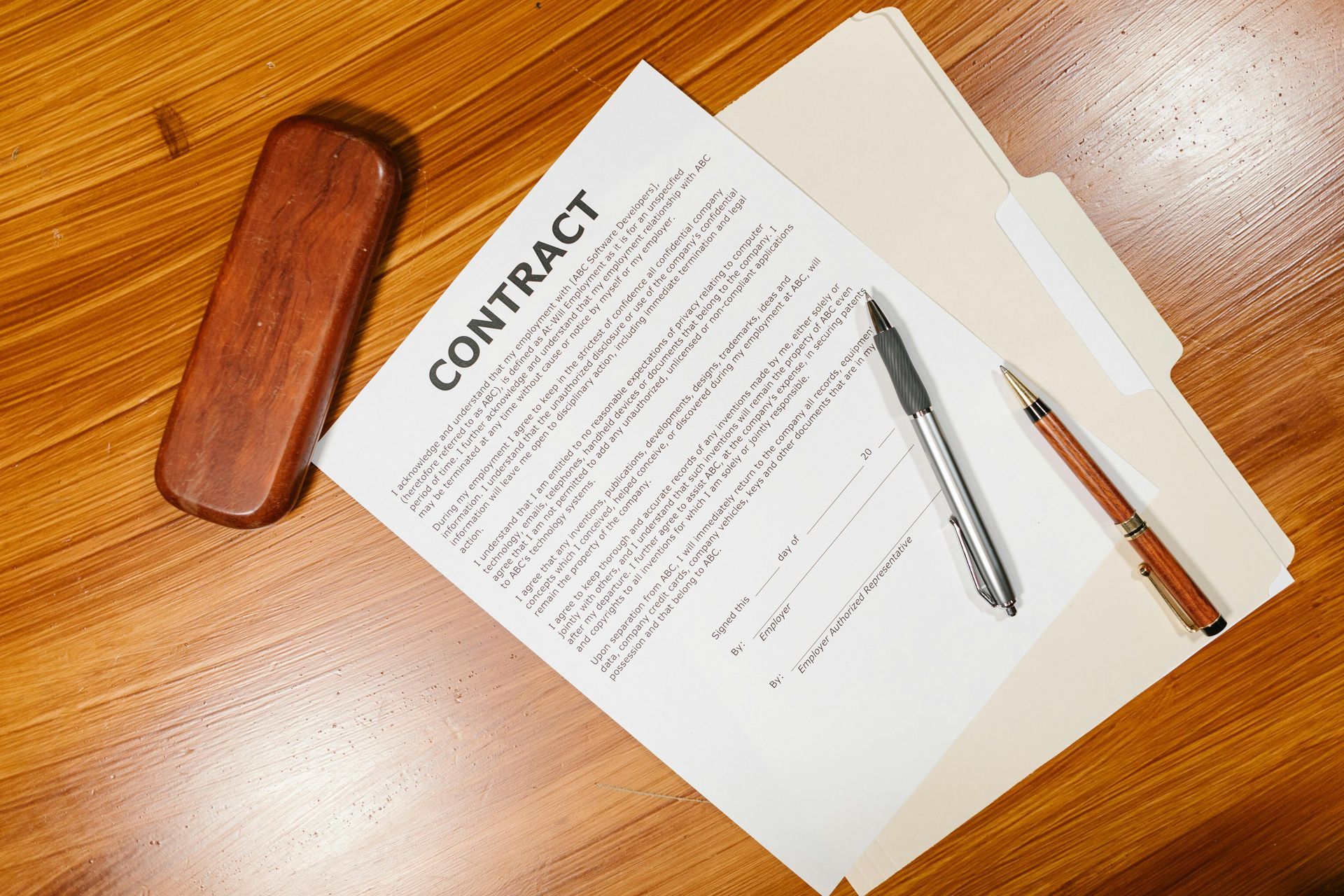
Contract document on a wooden table next to a pen.
By Bernard A. Williams, Esq. • July 6, 2026
The most expensive contract is the one you never reviewed. Learn how often to review your contracts and which clauses to check as your business changes.
Show More