

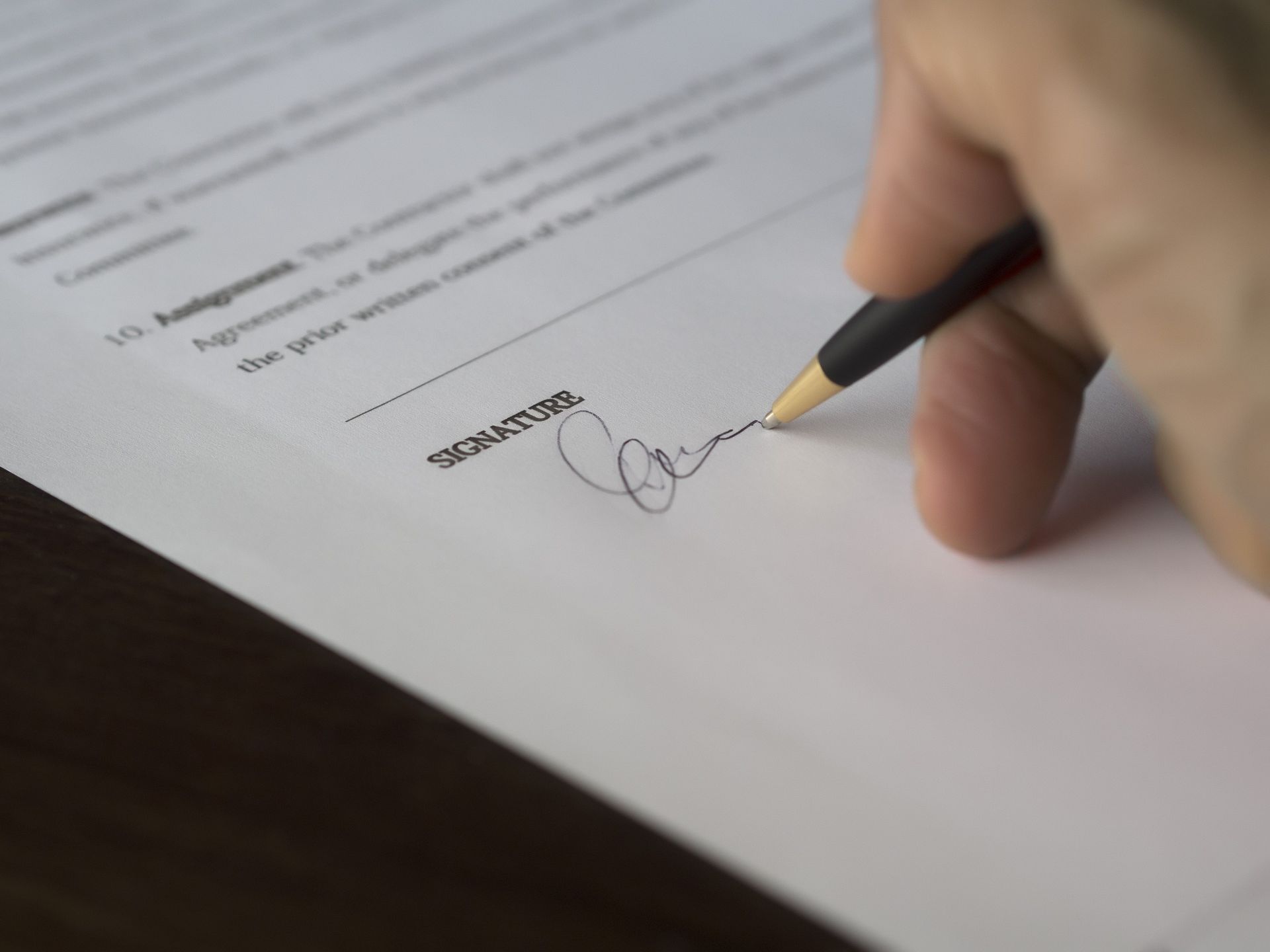
What Counts as a Breach of Contract in Pennsylvania?

Company Counsel • April 8, 2026

A bad deal doesn't always mean you have a legal claim. In Pennsylvania, a contract dispute turns on the agreement's terms, what happened in real life, and whether the problem caused actual loss.

That matters for small business owners. A missed email, a late payment, or sloppy work may be fixable. In other cases, the issue is serious enough to support a claim, and a breach of contract lawyer can help you tell the difference before you make a costly move.

The basic rules Pennsylvania uses to decide if a contract was broken

What makes a contract valid in the first place

Pennsylvania starts with a simple question: was there a real contract? Usually that means an offer, acceptance, clear enough terms, and something of value exchanged.

Many business contracts are written, and written terms are easier to prove. Some oral agreements can still count, but proof becomes harder when the parties remember the deal differently.

Why the exact contract language matters so much

The contract is the roadmap. It sets deadlines, payment terms, scope of work, notice rules, and when a party can end the deal.

Because of that, the first step is almost always to read the actual wording. A business may feel wronged, but the contract may allow delays, change orders, or limits on liability.

How Pennsylvania courts look at harm and causation

A broken promise alone may not be enough. The party claiming breach usually needs to show that the failure caused a real loss.

For example, if a vendor delivered late but your company suffered no measurable damage, the claim may be weaker. On the other hand, if that delay shut down production or cost you a customer, the harm is easier to show.

Common actions that can count as a breach of contract

Breaches come in many forms, and intent is not always the deciding factor. A party can breach a contract by failing to perform, performing late, or doing the job in a way the agreement does not allow.

Missing a payment or paying late

Nonpayment is one of the most common examples. That includes unpaid invoices, missed milestone payments, and repeated late payments.

A one-time delay may not always justify ending the deal at once. Still, if the contract makes time of payment important, or if late payment keeps happening, the issue can become much more serious.

Not delivering the work, goods, or services promised

Sometimes the breach is plain. The seller never ships the goods, the consultant never starts the project, or the vendor delivers something different from what the contract required.

This shows up often in supply deals, service agreements, and sales contracts. If the promised performance never arrives, the business impact can be immediate.

Doing the work the wrong way or too late

Performance can also fail when the work is poor, incomplete, or outside agreed standards. A contractor who uses the wrong materials or misses a hard launch date may be in breach even if some work was done.

Timing often matters as much as quality. In business, late performance can defeat the point of the deal.

Breaking exclusivity, confidentiality, or noncompete terms

Some contracts protect information, market position, or customer access. A party may breach by disclosing confidential data, ignoring an exclusivity promise, or violating a lawful restrictive covenant.

Money paid on time does not erase that problem. These terms often protect trust and business value, so a violation can matter even before the financial damage is fully known.

When a problem is serious enough to become a legal claim

Material breaches versus minor breaches

Not every breach carries the same weight. A material breach goes to the heart of the deal, while a minor breach involves a smaller failure that may still allow the contract to continue.


 The size of the mistake matters, but so does the contract language and the business impact.

If a software provider misses one minor reporting deadline, that may be fixable. If it fails to deliver the system your company bought, that may be material.

When one side can stop performing or end the contract

A serious breach may allow the non-breaching party to suspend work, terminate the agreement, or seek damages. But moving too fast can create a second dispute.

Many contracts require notice before termination. Some also require a chance to fix the problem, so self-help without review can backfire.

Why notice and cure periods matter

A notice-and-cure clause gives the other side time to correct the issue. If your contract requires written notice and you skip that step, you may weaken your position.

Because of that, process matters. A strong claim can become harder to enforce if the contract's own rules were ignored.

How to respond if you think the other side breached the deal

A calm response usually protects the business better than an emotional one. Start by collecting the agreement and the records that show what each side promised and did.

Gather the contract and all related records

Pull together the paper trail, including:

  • the signed contract and any amendments
  • emails, texts, and change orders
  • invoices, payment records, and timelines
  • proof of lost revenue or added costs

A clear record often shapes the dispute as much as the contract itself.

Send a clear written notice

Your notice should be factual and specific. State what term was breached, what happened, and what you want fixed.

That kind of message may preserve rights and trigger any cure period in the agreement. It also helps later if the dispute grows.

Talk with a breach of contract lawyer before taking action

Before you cancel the contract, stop work, or withhold payment, get legal review. A breach of contract lawyer can assess risk, spot notice issues, and help you choose the next step without making the dispute worse.

What remedies may be available after a breach in Pennsylvania

Money damages and lost profits

The most common remedy is money. That may cover direct losses caused by the breach, and in some cases lost profits if they can be proved with reasonable support.

The contract may limit damages, though. That's another reason the actual wording matters.

Specific performance or getting the deal completed

Sometimes money is not enough. If the subject of the contract is unique, a court may order a party to perform its obligation.

That remedy is less common in routine business disputes, but it can matter in the right case.

Attorneys' fees, interest, and contract-based penalties

These items are not automatic. Often, a party can recover attorneys' fees or interest only if the contract or a statute allows it.

Fee-shifting language can change the value of a claim fast. So can default interest and other contract-based charges.

Conclusion

A Pennsylvania breach of contract claim depends on three things: the contract, the facts, and the harm to your business. Small issues may call for a fix, while serious failures may support damages, termination, or court action.

Early review often gives business leaders better options. If the stakes are rising, a breach of contract lawyer can help you protect your position before the dispute spreads. Contact Company Counsel.

Person in a blue suit signing a document at a desk with papers and a pen.
By Bernard A. Williams, Esq. July 27, 2026
Non-compete rules are changing fast. Learn whether non-compete agreements are still enforceable for your business and what to use to protect it instead.

Colleagues reviewing documents together at a conference table.
By Bernard A. Williams, Esq. July 20, 2026
Who runs your business if you step away? Learn how business succession planning protects your legacy, your family, and the value you have worked to build.

Manager shaking hands with a new hire at a desk in an office.
By Bernard A. Williams, Esq. July 13, 2026
Hiring your first employees? Learn the legal requirements, from classification to handbooks to paperwork, that protect your business as you build a team.
Contract document on a wooden table next to a pen.
By Bernard A. Williams, Esq. July 6, 2026
The most expensive contract is the one you never reviewed. Learn how often to review your contracts and which clauses to check as your business changes.

Brown envelope stamped STARTUP in front of a laptop on a desk.
By Bernard A. Williams, Esq. June 29, 2026
Starting a business? Here are the core legal documents every new business needs, from formation and contracts to IP and HR, to build on a solid foundation.

Gavel on a wooden table with a person typing on a laptop and documents.
By Bernard A. Williams, Esq. June 22, 2026
Weak contracts and unclear ownership cost you at closing. Learn the legal issues that reduce business value, and how to fix them well before you sell.
Golden scales of justice on a desk with a person writing nearby.
By Bernard A. Williams, Esq. June 15, 2026
Good governance builds investor confidence and business value. Learn the corporate governance basics—records, boards, decisions—for growing companies.
People signing legal documents at a desk with a statue of justice nearby.
By Bernard A. Williams, Esq. June 8, 2026
Most business lawsuits are preventable. Learn practical steps across contracts, entity structure, HR, and insurance to protect your business from lawsuits.
Two people in suits shaking hands outdoors after a business agreement.
By Bernard A. Williams, Esq. June 1, 2026
A handshake isn't a partnership plan. Learn what a partnership agreement should include, roles, money, decisions, and exits, to protect the relationship.
Two businesspeople shaking hands across a desk with documents and a laptop.
By Bernard A. Williams, Esq. May 25, 2026
Buyers walk away from messy records. Learn what happens during due diligence and the contracts, HR files, and IP proof that make your business buyer ready.
Show More