




How to Structure Your NYC Business for Outside Investment

Company Counsel • April 23, 2026

In New York City, investors usually look for three things first: risk control , clear decision-making, and room to grow. If your business structure is messy, even a strong pitch can lose momentum.

The right setup makes a company easier to fund, easier to run, and easier to trust. That's why founders, CEOs, and owners often bring in corporate lawyers before a raise, not after problems show up.

Start with a structure that matches your funding goals

A business shouldn't pick a legal structure only because it was cheap, quick, or familiar. The better question is whether that structure fits the kind of capital you want now and the kind you may want later.

In NYC, that often means thinking beyond formation. You need to weigh control, taxes, liability, and how future investors will view the company. A setup that works for a two-person business may create friction when outside money comes in.

Why many investors prefer a clean equity story

Investors want to understand ownership fast. They want to know who owns what, who has voting rights, and whether anyone has side promises that could surface later.

A clean equity story does more than look organized. It lowers perceived risk. If founder splits were handled over text messages, or if an early advisor was promised "a piece of the company" without real papers, investors will slow down and ask harder questions.

If an investor can't tell who owns the business and on what terms, trust drops fast.

This is one reason early cleanup matters. Fixing ownership issues during due diligence is slower, more expensive, and more stressful than fixing them before a raise starts.

When an LLC makes sense, and when a corporation is better

An LLC can work well for many businesses. It offers flexibility, pass-through tax treatment in many cases, and fewer formalities than a corporation. For a closely held company that expects limited outside investment, an LLC may be a sound choice.

A corporation, often a Delaware C corporation for venture-backed companies, is usually easier for institutional investors to underwrite. Stock is familiar. Preferred equity terms are easier to structure. Boards, voting rights, and exit mechanics are also more standard.

That doesn't mean every NYC business should convert to a corporation right away. It means the choice should match the funding path. If you expect angel investors, venture capital, or multiple rounds later, a corporation often creates fewer deal issues.

How your long-term exit plan should shape the structure

Your structure should support the end game, not block it. If you hope to sell to a strategic buyer, take private equity money, or raise larger rounds, today's entity choice can affect tomorrow's timeline.

For example, a company that starts with informal ownership terms may spend months cleaning up before a buyer signs. By contrast, a business with clear stock issuance, board approvals, and signed agreements can move faster.

That is where planning pays off. Good corporate lawyers don't only file formation papers. They help build a company that outside capital can enter, and that future buyers can understand.

Get your ownership, governance, and records in order

Once the entity is right, investors will look at the paperwork behind it. They want to see that ownership is documented, decision-making authority is clear, and the company follows its own rules.

This part is less glamorous than the pitch deck, but it often carries more weight. During diligence, missing approvals and vague records can create the kind of doubt that kills momentum.

Put founder equity and vesting in writing

Founder equity should never live in a handshake. Each founder's ownership, vesting, role, and rights should be written down early.

Vesting matters because it protects the business if someone leaves after six months. Without vesting, a departed founder may keep a large stake that no longer matches contribution. That creates tension inside the company and concern outside it.

Good documents also make the arrangement feel fair. Everyone knows the deal. Investors like that because it shows the founders dealt with hard issues instead of avoiding them.

Use bylaws, operating agreements, and board rules that fit the business

Core governance documents should match the company's actual structure and stage. A corporation needs bylaws, board actions, and stock records. An LLC needs an operating agreement that reflects how members make decisions and share economics.

Too often, businesses download a template and never revisit it. Then the real company changes, but the papers don't. A founder acts without proper approval. A financing closes without complete consents. Later, investors ask for proof and the record is thin.

This is where corporate lawyers help turn loose habits into working rules. The goal is not paperwork for its own sake. The goal is a company that can show clean authority when money is on the table.

Keep cap tables, consents, and approvals organized

A clean cap table should show every equity grant, transfer, option, warrant, and conversion right. If that sounds basic, good. Investors want basic done well.

Approvals matter too. Stock issuances, major contracts, loans, and board actions should have signed consents or minutes behind them. If signatures are missing, investors may question whether a past action was valid.

In practice, organized records do two things. They speed up diligence, and they reduce last-minute legal cost. Both matter when a deal timeline is tight.

Make the company easy to invest in during due diligence

Due diligence is where confidence gets tested. Investors will review contracts, compliance, employment issues, intellectual property, and how the company handled past decisions.

A founder may feel the business is solid because customers are buying and the team is growing. Investors look deeper. They want proof that growth hasn't created hidden legal risk.

Clean up contracts before investors ask for them

Key agreements should be current, signed, and easy to pull. That includes customer contracts, vendor terms, leases, financing papers, contractor agreements, and any side letter that changes the economics of a deal.

Problems often hide in ordinary files. A renewal never got signed. A founder signed in a personal name instead of the company name. A contract assigns key rights to the wrong party. Those issues may be fixable, but they still slow the raise.

Cleaning this up in advance gives management better visibility too. You can't manage risk well if your core contracts are scattered across inboxes and old PDFs.

Protect intellectual property and company assets

Investors want comfort that the company owns the assets driving value. If software code, brand assets, customer data practices, or inventions sit in personal accounts or unsigned contractor work, the risk goes up.

Start with basics. Employees and contractors should assign relevant work product to the company. Trademark strategy should be thoughtful. Important licenses should be tracked, and restrictions should be understood before a financing or exit.

For growing companies, this is one area where corporate lawyers often coordinate with IP counsel and business leaders. The point is simple: the company should own what it claims to own.

Fix compliance gaps before they become red flags

Compliance gaps often look small until money is involved. Missed annual filings, payroll mistakes, outdated permits, weak worker classification, and informal reimbursements can all raise concern.

In New York, employment rules and tax issues can move fast from minor oversight to material risk. Investors know that. So do their counsel.

This is why many growth-stage companies use Contact Company Counsel for ongoing legal support before a raise, not only when a term sheet arrives. Regular review can spot issues early, while they are still manageable.

Show investors you can grow without creating legal chaos

Strong structure isn't only about getting one round closed. It should also support the business after the money hits the bank. Investors want to see that growth won't trigger confusion, bottlenecks, or preventable disputes.

That means building simple systems now. Decision rights should be clear. High-risk actions should require approval. The company should know when to bring legal review into the process.

Build policies for hiring, spending, and approvals

You don't need a thick manual to look investment-ready. You do need basic rules that people follow.

For many businesses, that starts with a few clear items:

  • Who can sign contracts, and up to what dollar amount
  • How expenses get approved and reimbursed
  • Whether workers are employees or contractors
  • When the board or managers must approve a major step

These rules help management act with confidence. They also show investors that growth won't depend on one founder keeping everything in their head.

Plan ahead for future rounds or strategic exits

Many companies focus only on the next raise. Smart ones also think about how today's terms affect later rounds. Convertible notes, SAFEs, preferred equity, protective rights, and option pools can all shape future control and economics.

The same goes for sale readiness. A buyer or later investor will want clean books, clear approvals, assignable contracts, and reliable IP ownership. If you build with that future in mind, you won't have to rebuild the company under pressure.

A part-time outside legal partner can help keep that structure intact as the business grows. For many NYC companies, that model gives leadership regular guidance without adding a full-time in-house role too early.

Conclusion

Investors back businesses they can understand and trust. A sound structure, clean records, and steady legal habits make that trust easier to earn.

If you're preparing to raise capital in New York, the strongest move is often the least flashy one: fix the foundation before investors start pulling on it. The right corporate lawyers can help you do that with fewer delays, lower friction, and a clearer path to funding.

If your company is getting ready for a raise or a structural cleanup, Contact Company Counsel .

Person in a blue suit signing a document at a desk with papers and a pen.
By Bernard A. Williams, Esq. July 27, 2026
Non-compete rules are changing fast. Learn whether non-compete agreements are still enforceable for your business and what to use to protect it instead.

Colleagues reviewing documents together at a conference table.
By Bernard A. Williams, Esq. July 20, 2026
Who runs your business if you step away? Learn how business succession planning protects your legacy, your family, and the value you have worked to build.

Manager shaking hands with a new hire at a desk in an office.
By Bernard A. Williams, Esq. July 13, 2026
Hiring your first employees? Learn the legal requirements, from classification to handbooks to paperwork, that protect your business as you build a team.
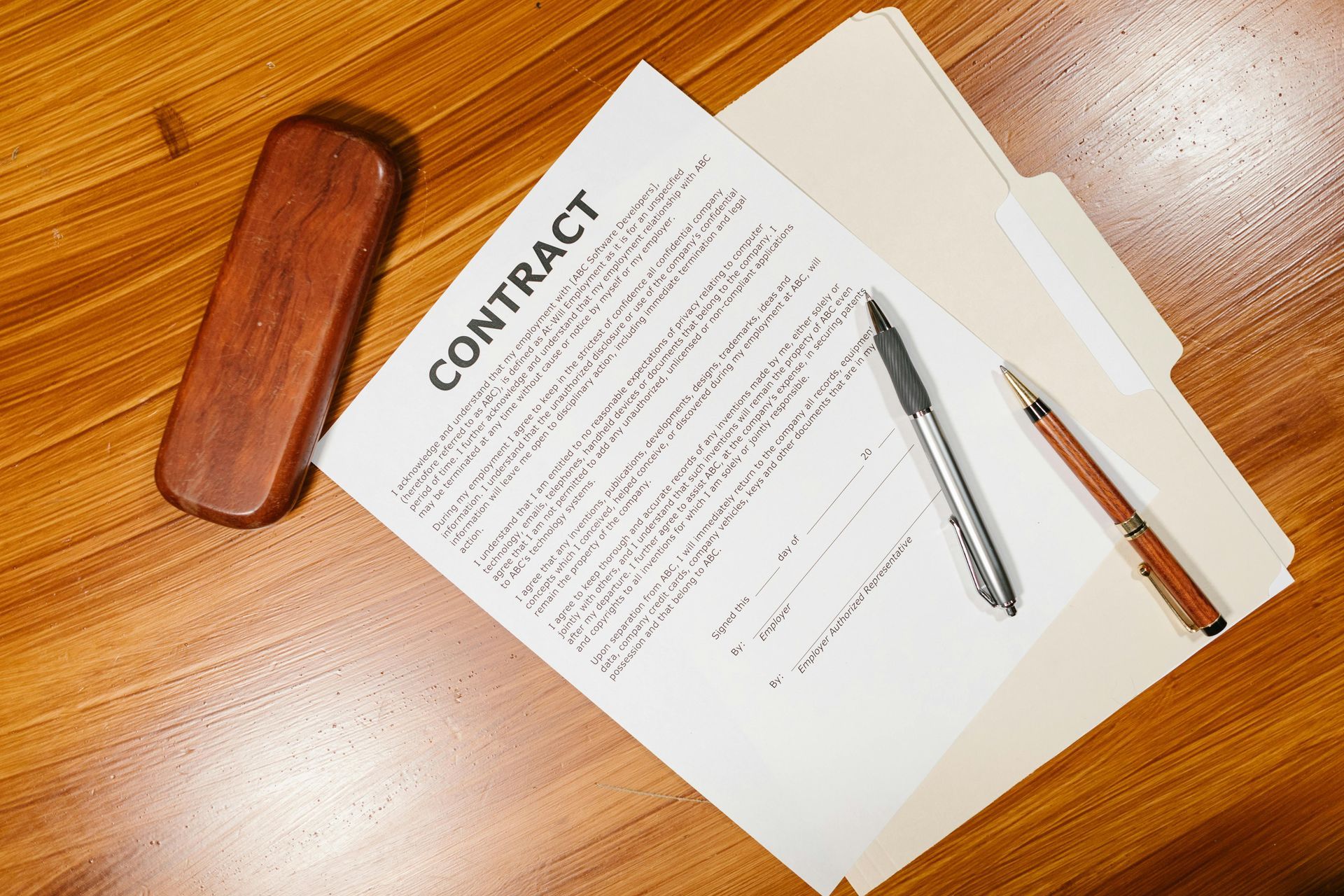
Contract document on a wooden table next to a pen.
By Bernard A. Williams, Esq. July 6, 2026
The most expensive contract is the one you never reviewed. Learn how often to review your contracts and which clauses to check as your business changes.

Brown envelope stamped STARTUP in front of a laptop on a desk.
By Bernard A. Williams, Esq. June 29, 2026
Starting a business? Here are the core legal documents every new business needs, from formation and contracts to IP and HR, to build on a solid foundation.

Gavel on a wooden table with a person typing on a laptop and documents.
By Bernard A. Williams, Esq. June 22, 2026
Weak contracts and unclear ownership cost you at closing. Learn the legal issues that reduce business value, and how to fix them well before you sell.
Golden scales of justice on a desk with a person writing nearby.
By Bernard A. Williams, Esq. June 15, 2026
Good governance builds investor confidence and business value. Learn the corporate governance basics—records, boards, decisions—for growing companies.
People signing legal documents at a desk with a statue of justice nearby.
By Bernard A. Williams, Esq. June 8, 2026
Most business lawsuits are preventable. Learn practical steps across contracts, entity structure, HR, and insurance to protect your business from lawsuits.
Two people in suits shaking hands outdoors after a business agreement.
By Bernard A. Williams, Esq. June 1, 2026
A handshake isn't a partnership plan. Learn what a partnership agreement should include, roles, money, decisions, and exits, to protect the relationship.
Two businesspeople shaking hands across a desk with documents and a laptop.
By Bernard A. Williams, Esq. May 25, 2026
Buyers walk away from messy records. Learn what happens during due diligence and the contracts, HR files, and IP proof that make your business buyer ready.
Show More